


Great in hubby's office space!
Often Purchased With

$29.00 NZD


Ready to ship


Pay securely with...


Couldn't load pickup availability
| Roll Size | 10.05m x 0.53m |
|---|---|
| Pattern Repeat | 0.53m |
| Application | Paste The Paper |
| SKU | 12250 |
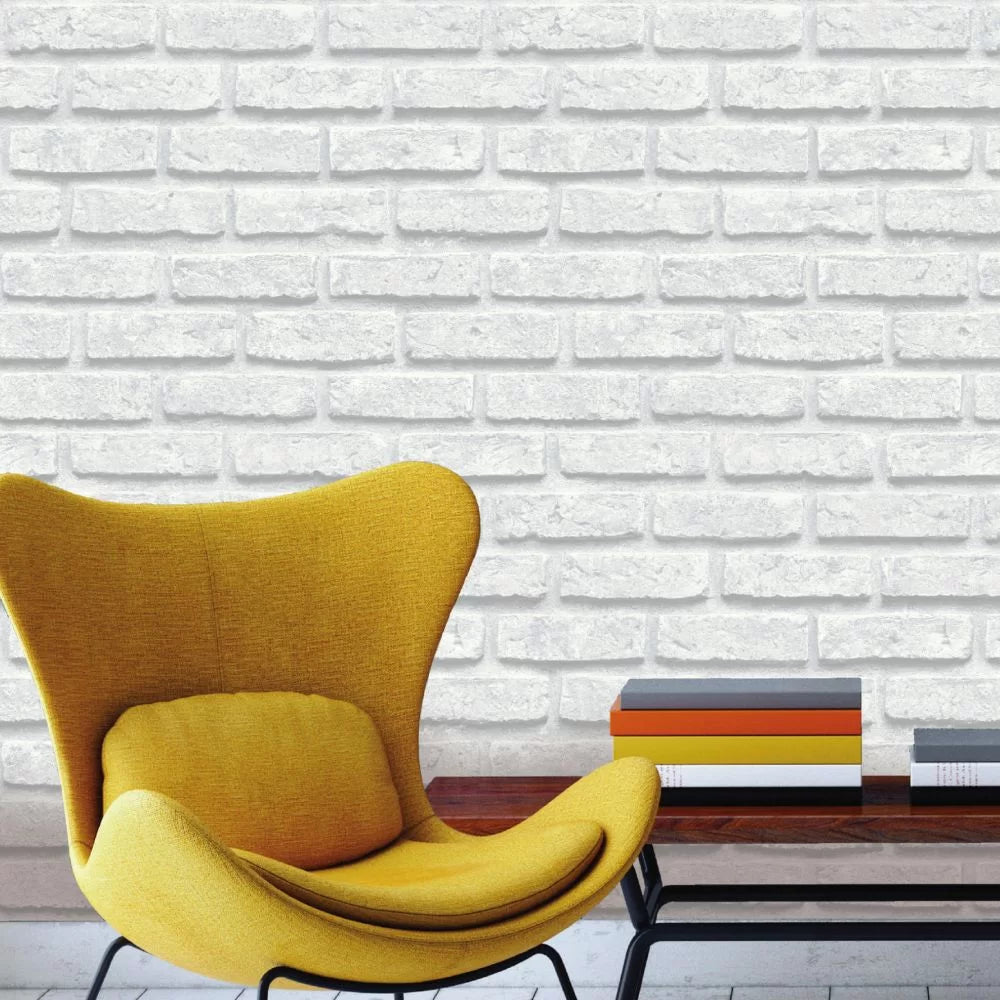
Distressed Brick wallpaper is a realistic brick effect wallpaper. Many different styles from many different manufactures. Our faux brick wallpaper is the perfect way to add colour and style to your room for that New York Loft look.
| Product Dimensions | 10m X 53cm |
| Pattern Match | ,53cm |
| Pattern Type | Full Drop |
| Application |
Paste the paper |
| Durability | Spongeable and durable |
| Sampling | Sold Out |
| Delivery | Depending on batch numbers and volume required please allow up to 21 days on average for delivery - unless in our Nelson warehouse. |
| Freight | Free NZ shipping for wallpaper orders over $320. |
The short answer is probably, but it depends on the bathroom and the type of wallpaper you use.
There’s no such thing as a dedicated "bathroom wallpaper", but many wallpapers can be used in a bathroom if the conditions are right. The key things to consider are ventilation, placement, exposure to steam and water, and the wallpaper's durability rating. In a well-ventilated bathroom, wallpaper can last for years, but in areas with constant moisture or direct water contact, you might run into issues.
Wallpapers are rated based on durability and washability, which can help determine if they’re suitable for a bathroom. Ideally, you should use a wallpaper with an Extra Washable or higher rating, as these are more resistant to moisture and easier to clean.
✔ Spongeable – Can handle light cleaning with a damp sponge but is not suitable for high-moisture areas.
✔ Washable – Can be cleaned with mild soapy water but should still be placed in low-moisture zones.
✔ Extra Washable – More resistant to moisture and easier to clean, making it better suited for bathrooms.
✔ Scrubbable – The most durable option, designed to withstand scrubbing and cleaning. These are usually vinyl wallpapers, making them the best choice for bathrooms.
If the bathroom is well-ventilated and the wallpaper is not in a high-contact area, you might get away with using a lower-rated wallpaper. However, if the wallpaper is likely to be roughed up—such as behind a towel rail or in a space where kids are frequently touching the walls—choosing a higher durability rating will help it last longer.
✔ Ventilation is key – A well-ventilated bathroom (with an extractor fan or windows) is essential to prevent moisture buildup, which can cause peeling or mold growth behind the wallpaper.
✔ Placement matters – Wallpaper works best in low-splash areas, such as above tile wainscoting, outside of shower zones, or on feature walls. Avoid areas where it will be regularly exposed to water, such as behind towel rails, directly above sinks, or inside showers.
✔ Choose the right wallpaper type –
✔ Sealing wallpaper edges – In extreme cases, sealing wallpaper edges with a clear decorator’s varnish can provide extra protection, but this is usually not necessary.
If your bathroom lacks proper ventilation or tends to stay steamy for long periods, wallpaper may not be the best choice. High humidity and excess moisture can cause the adhesive to break down over time, leading to peeling, bubbling, or mold growth behind the wallpaper. In these cases, alternative wall finishes like tiles or moisture-resistant paint may be a better option.
The short answer is probably—but it depends on the bathroom and the type of wallpaper. You can use wallpaper in a bathroom if it is well-ventilated, placed away from direct water exposure, and has a high washability rating. Vinyl or extra-washable wallpapers are the best options, and choosing the right placement is key to longevity.
If your bathroom has good airflow and the wallpaper won’t be in a high-contact area, you might get away with using a lower-rated wallpaper. However, if the wallpaper is likely to be touched, bumped, or exposed to minor splashes, choosing a higher durability rating will help it last longer.
If the space is constantly steamy or wet, wallpaper may not be the best choice, and a moisture-resistant alternative may be a better long-term solution.
That said, when in doubt, most people go with what they love. The worst-case scenario? The wallpaper doesn’t hold up, and you remove it. But this is not something we hear happing often.
Yes, you can hang wallpaper yourself! Many modern wallpapers are designed for DIY installation, and with the right tools, preparation, and patience, you can achieve a great result.
However, your expectations and attention to detail matter. If you’re someone who notices every tiny imperfection, then a professional may be the better option. If you’re happy with a good but not necessarily flawless result, then DIY is a great choice!
✅ You're using paste-the-wall wallpaper – This type is the easiest to install and reposition.
✅ You're confident with basic DIY skills like measuring and cutting – You don’t need to be a professional, but accuracy is important.
✅ Your walls are smooth and prepared – Uneven surfaces can make wallpapering much harder.
✅ You have realistic expectations – A DIY job might not be 100% perfect, but it can still look fantastic.
With the right tools, preparation, and care, hanging wallpaper yourself can be cost-effective and rewarding!
🔹 The wallpaper has a complex pattern repeat – Some patterns require precise alignment, which can be tricky.
🔹 You're working with paste-the-paper wallpaper – This requires soaking time and is harder to work with.
🔹 You’re wallpapering a ceiling – Installing wallpaper overhead is difficult and physically demanding.
🔹 Your walls are textured, damaged, or uneven – A professional can prep the walls properly to ensure the best result.
🔹 You want a high-end finish – If imperfections are going to worry you, then a professional installer may be worth the investment - but let them know you're expectations up front.
👉 If you’re confident with DIY, go for it! Just take your time, follow the instructions carefully, and prepare your walls properly. We've had 80 years wallpaper for the first time and love the results!
👉 If the wallpaper is complex, expensive, or in a tricky area, a professional installer may be worth considering to avoid costly mistakes.
Still unsure? Contact us, and we’ll help you decide whether your wallpaper is DIY-friendly or best left to a pro!
We offer bulk discounts for orders of 12 or more rolls. Email our wallpaper experts with details of your project and we'll prepare an individual offer.


Enter your wall dimensions to calculate how many rolls you need. We will automatically use the product measurements of the design page you are on to give you a more accurate estimate.
Rolls required:
0
This is an estimate & includes an allowance for wastage. We recommend consulting your decorator for an exact calculation.
Calculation details:
Sample
 Product Information & Technical Details
| Brand | Holden Decor |
|---|---|
| SKU | 12250 |
| Material | non-woven |
| Application | Paste The Paper |
| Roll Length | 10.05m |
| Roll Width | 0.53m |
| Pattern Repeat | 0.53m |
| Wallpaper Symbols |


|

The short answer is probably, but it depends on the bathroom and the type of wallpaper you use.
There’s no such thing as a dedicated "bathroom wallpaper", but many wallpapers can be used in a bathroom if the conditions are right. The key things to consider are ventilation, placement, exposure to steam and water, and the wallpaper's durability rating. In a well-ventilated bathroom, wallpaper can last for years, but in areas with constant moisture or direct water contact, you might run into issues.
Wallpapers are rated based on durability and washability, which can help determine if they’re suitable for a bathroom. Ideally, you should use a wallpaper with an Extra Washable or higher rating, as these are more resistant to moisture and easier to clean.
✔ Spongeable – Can handle light cleaning with a damp sponge but is not suitable for high-moisture areas.
✔ Washable – Can be cleaned with mild soapy water but should still be placed in low-moisture zones.
✔ Extra Washable – More resistant to moisture and easier to clean, making it better suited for bathrooms.
✔ Scrubbable – The most durable option, designed to withstand scrubbing and cleaning. These are usually vinyl wallpapers, making them the best choice for bathrooms.
If the bathroom is well-ventilated and the wallpaper is not in a high-contact area, you might get away with using a lower-rated wallpaper. However, if the wallpaper is likely to be roughed up—such as behind a towel rail or in a space where kids are frequently touching the walls—choosing a higher durability rating will help it last longer.
✔ Ventilation is key – A well-ventilated bathroom (with an extractor fan or windows) is essential to prevent moisture buildup, which can cause peeling or mold growth behind the wallpaper.
✔ Placement matters – Wallpaper works best in low-splash areas, such as above tile wainscoting, outside of shower zones, or on feature walls. Avoid areas where it will be regularly exposed to water, such as behind towel rails, directly above sinks, or inside showers.
✔ Choose the right wallpaper type –
✔ Sealing wallpaper edges – In extreme cases, sealing wallpaper edges with a clear decorator’s varnish can provide extra protection, but this is usually not necessary.
If your bathroom lacks proper ventilation or tends to stay steamy for long periods, wallpaper may not be the best choice. High humidity and excess moisture can cause the adhesive to break down over time, leading to peeling, bubbling, or mold growth behind the wallpaper. In these cases, alternative wall finishes like tiles or moisture-resistant paint may be a better option.
The short answer is probably—but it depends on the bathroom and the type of wallpaper. You can use wallpaper in a bathroom if it is well-ventilated, placed away from direct water exposure, and has a high washability rating. Vinyl or extra-washable wallpapers are the best options, and choosing the right placement is key to longevity.
If your bathroom has good airflow and the wallpaper won’t be in a high-contact area, you might get away with using a lower-rated wallpaper. However, if the wallpaper is likely to be touched, bumped, or exposed to minor splashes, choosing a higher durability rating will help it last longer.
If the space is constantly steamy or wet, wallpaper may not be the best choice, and a moisture-resistant alternative may be a better long-term solution.
That said, when in doubt, most people go with what they love. The worst-case scenario? The wallpaper doesn’t hold up, and you remove it. But this is not something we hear happing often.
Yes, you can hang wallpaper yourself! Many modern wallpapers are designed for DIY installation, and with the right tools, preparation, and patience, you can achieve a great result.
However, your expectations and attention to detail matter. If you’re someone who notices every tiny imperfection, then a professional may be the better option. If you’re happy with a good but not necessarily flawless result, then DIY is a great choice!
✅ You're using paste-the-wall wallpaper – This type is the easiest to install and reposition.
✅ You're confident with basic DIY skills like measuring and cutting – You don’t need to be a professional, but accuracy is important.
✅ Your walls are smooth and prepared – Uneven surfaces can make wallpapering much harder.
✅ You have realistic expectations – A DIY job might not be 100% perfect, but it can still look fantastic.
With the right tools, preparation, and care, hanging wallpaper yourself can be cost-effective and rewarding!
🔹 The wallpaper has a complex pattern repeat – Some patterns require precise alignment, which can be tricky.
🔹 You're working with paste-the-paper wallpaper – This requires soaking time and is harder to work with.
🔹 You’re wallpapering a ceiling – Installing wallpaper overhead is difficult and physically demanding.
🔹 Your walls are textured, damaged, or uneven – A professional can prep the walls properly to ensure the best result.
🔹 You want a high-end finish – If imperfections are going to worry you, then a professional installer may be worth the investment - but let them know you're expectations up front.
👉 If you’re confident with DIY, go for it! Just take your time, follow the instructions carefully, and prepare your walls properly. We've had 80 years wallpaper for the first time and love the results!
👉 If the wallpaper is complex, expensive, or in a tricky area, a professional installer may be worth considering to avoid costly mistakes.
Still unsure? Contact us, and we’ll help you decide whether your wallpaper is DIY-friendly or best left to a pro!


We offer bulk discounts for orders of 12 or more rolls. Email our wallpaper experts with details of your project and we'll prepare an individual offer.
The wallpaper people
Wallpaper has been our passion since 2009. We’ve hand-picked a collection of thousands of wallpapers, from high-end producers across the UK, Europe, Scandinavia, and Asia - to bring together New Zealand’s best wallcover collection at New Zealand’s best prices. (We’ve also designed a few of our own)


Overall rating: 4.7 / 5 from 26 reviews.
Great in hubby's office space!
Havnt put up yet. Painting first

Easy to apply 👌 Delighted with the results Before and after photos, changes the whole room

This wallpaper brick looks so much like real bricks. Quality of paper was excellent and very easy to work with and hang.

Still want to put some prints on the wall…. But we are pretty impressed with our first ever attempt to wallpaper! Thanks for the tips you gave me when we collected.

Best paper—my house looks like a lower east side New York City apartment. I love it so much!
Excellent service and product Highly Recommend A++

Just in time for Christmas and Santa to come down the chimney now with the brick wall paper feature. An easy application really. Just like wrapping a big present.

Easy wall paper to put up . Looks better that the picture . Hides a multiple of un evenness in an old house .

We love the Rustic New York Apartment look so we've done our toilet bathroom and laundry Brick We love it .Had so many Compliments.

I wallpapered my bathroom with the brick wallpaper. It's awesome. So happy with it. By the way your service was just as awesome!
Great online experience ordering and delivery. Very happy with the product.

Hi Guys LOVE the wallpaper and the quality! We replaced wallpaper with wooden planks and wanted something different to compliment our 'earth tones' decor, including a country kitchen....this wallpaper was just item we needed to finish this off. Thank you!
Good

It fits well!

Excellent wallpaper. 4 rolls did 2 walls: 1 wall 2 x 3.3 and 1 wall 2 x 3.1. Wallpaper has a slight bumpy effect do not totally flat. Pattern match was good with same pattern being about every 10 rows. Still have best part of a roll left over. Photo below is of the room I've decorated.

Quick shipping, paper quality was great. Very happy with my feature wall.

It was easy to apply and adheres well to the wall. Great quality and highly recommended

We has struggled to find a suitable paper for the wall. Brick was also hard to find in a paper. Purchased from you, with the total process being without any issues at all. The paper was as advertised, and great to put up. We think it looks awesome - blends in perfectly. First photo is wall at end of open plan kitchen/ding/lounge and 2nd where it wraps round to a hallway Ian & Kris

Love this brick wallpaper bought in 2014 (I think) from The Inside.

Once again thanks for all your help.

Very nice wallpaper, easy to apply. Adheres very well. You can't see any transitions at all. If the wall is a little uneven, you won't see it later because the pattern will hide everything.

Love this brick wallpaper so much! I get so many compliments on it! The best zoom background ever! It has really made my home office feel more like an office and everyone thinks it looks like real brick! I’m so pleased with it I bought more to make a feature wall in my bedroom!

Looks Great
The inside has plenty of selection which was great. Overall I am happy with the design but am sad to say that the quality of the product is not great. we used the black brick wallpaper as a feature wall and upon opening the wallpaper found multiple scratches and blemishes in the wallpaper which has made the overall look of the feature wall apear cheap and poorly done. This was noticed once we had commited to applying it to the wall. At the very expensive price per roll I would atleast expect a wallpaper without blemishes/marks.

Good